Coquette
Mariners' Museum, Uncurated Search Results
Type: Pungy
Year: 1855
Builder:
Location:

These records are found in the online catalog of The Mariners’ Museum and Park in Newport News, Virginia. Uncurated search results are presented to give researchers and interested readers an idea of whether the museum’s archives contain information about this vessel and whether it may be worthwhile to visit the museum’s catalog search page for further investigation. Uncurated results may be inaccurate or incomplete.
Search mode: Exact Name. Search phrase(s): "Coquette". Results returned: 19. Results displayed in this table: 19.
Use these buttons to send uncurated search results to your own app or text document for further research. First, check the box for any row, or click "Select All" then uncheck any rows. Then click "Show Selections". You can then copy your selections from the text box and past them into your app.
| Fetch? | Row ID | Media | Date | Vessel | Place | Related Places | Inscription/Marks | Subject | Notes | Archive Number |
|---|---|---|---|---|---|---|---|---|---|---|
| 1 | No image URL. | 1921 | "France Marne Sur Coquette 1921" | MS0003/-001.334 | ||||||
| 2 | 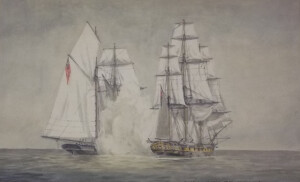 | NOTES: Information concerning the Bailey Collection of watercolor views of U.S. Naval actions (1745-1850) in The Mariners’ Museum, Newport News, Virginia In 1940 The Mariners’ purchased from a dealer in London a collection of 254 watercolor drawings, which were at the time attributed to Charles T. Warren (1767-1823), an engraver. They were represented as having belonged to a Charles Kingsley Bailey, and have henceforth been referred to as the Bailey Collection. The views in the collection range from the Siege of Louisburg in 1745 to an action which occurred in 1850. Simply on the basis of the breadth of coverage, then, it appeared unlikely that these were executed contemporary to the action by one person. Moreover, persons making studies of individual vessels represented in the collection have pointed out that there are major inaccuracies in the details of the vessels. Research initiated by the museum from 1974 to 1982 subsequently revealed that the watercolors were actually done by Irwin John Bevan (1852-1940). Welsh-born Bevan was a keen naval historian and his sketches and paintings included many maritime subjects. His work can be seen in Sea Fights of the Great War by W.L. Wyllie and M. F. Wrenn, published in 1918. Since Bevan did book illustrations, the present assumption is that this group of watercolors was executed to illustrate a projected work on the history of the U.S. Navy, especially as it related to the British Navy. Detailed contemporary accounts of the U.S.-British actions were written down in letters, official reports and newspapers of the day and nineteenth century historians had these sources available for their texts. The accounts accompanying Bevan’s paintings relied heavily on all these sources. Notwithstanding this however, the paintings must not be taken as primary documents of either the vessels or the engagements. They should be viewed in the context of the artist’s conceptions, which may vary considerably in their reliability. It is left to the discretion of the researcher whether or not this material will be of value in the current project. | CL12946 | |||||||
| 3 | 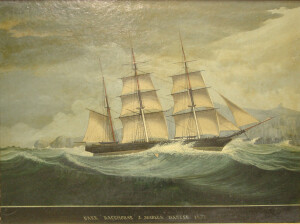 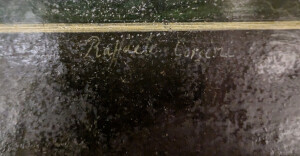 | NOTES: Raffaele Corsini was an artist active in Smyrna. Dorothy Brewington in 'Dictionary of Marine Artists" identifies Corsini as Turkish. Others identify him as Italian-Turkish and still others as Italian. Could the coastline in the background be Cape St. Angelo, also known as Cape Malea or Malia, is the easternmost of the three main southern promontories of the Peloponnese peninsula in Lakonia, Greece? VESSEL INFORMATION - VESSEL NAME: RACE HORSE VESSEL TYPE: AMERICAN BARK VESSEL DIMENSIONS: 125 x 30 x 16, 530 TONS, DRAFT 16' SHIP BUILDER: SAMUEL HALL BUILDER LOCATION: EAST BOSTON BUILD DATE: 1850 SHIP OWNER: I. GODDARD & CO. VESSEL HISTORY: Designed [According to a letter written by Hall to the 'Boston Daily Atlas (May 10, 1851), he asked Pook to make the models and molds for Race Horse based on Coquette, with a few modifications, in order to help Pook to "get his name before the public".] and built by Samuel Hall and launched in 1850. Race Horse performed well in the First Clipper Race Around the Horn, which took place in 1850. Race Horse sailed from Boston to San Francisco in 109 days (or 94 days, 14 hours land to land). She made Cape Horn just 52 days out on this trip, 20 miles offshore. On August 8, 1851, Race Horse sailed from Boston to Smyrna, Turkey under the command of Captain Searles, with several passengers who were en route with their wives to work as missionaries in Armenia: Sanford Richardson, Edwin Goodell, and Benjamin Parsons. Vessel repaired in 1856. NOTES: Many people believe that Samuel Hartt Pook was the designer of Game Cock, but a letter submitted by shipbuilder Samuel Hall to the Boston Daily Atlas on May 10, 1851 proves otherwise: TO THE EDITORS OF THE BOSTON ATLAS -- Gentlemen: I noticed in your columns a communication headed "Clippers" and signed "Square." I am very sorry that I should feel under the necessity to make a reply to Mr. Square. He says:-- "In describing the clipper ships Surprise and Game Cock, barques Mermaid and Race Horse -- all vessels of beautiful models - you have omitted to state that they were designed and modelled by Samuel H. Pook, who is a young man of great scientific attainments." I would be the last to disparage Mr. Pook's scientific attainments, but when Mr. Square, undertakes to deprive me of any credit I have fairly acquired, and place it to the account of another, I shall take the liberty to correct him. I did, after several solicitations from Mr. Pook, employ him to make the models, under my directions, above named -- not that I believe he thought I needed any of his science, but the reverse. He wished to get his name before the public, and wished me to render him all the assistance I could. I did so, the first model made was that of the barque Race Horse. The design was taken from the barque Coquette, designed and built by me several years ago, and the alterations from her were suggested by myself, and approved by Messrs. Paul and J.M. Forbes, before Mr. Pook knew such a vessel was to be built; after the second time trying I did approve of the model, and he laid her down and made the moulds. The next was the ship Surprise. Mr. Square just ask Mr. Pook how many models he made for that ship before I was satisfied, or would consent to have her laid down and moulds made? Just three. The ship Game Cock's model was made for Capt. Daniel C. Bacon, and exhibited to me for my approval, and I did approve of it with some slight alterations, and they were made and I built the ship. The next, and last, was the barque Mermaid. Her model was made for Messrs. Edward Gassett & Co., and by me altered and approved before the moulds were made. This is the true history of the designing and modelling of the above named vessels. And it is a little remarkable that it should so happen that I should have had the good fortune to have built all the beautifully designed and modelled vessels, while all the other models and designs of his are left unnoticed. These are the facts, Mr. Square, and all the merits you have gained for the scientific gentleman by your communication, I shall leave for those interested to judge. | CL8658 | |||||||
| 4 | 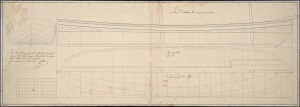 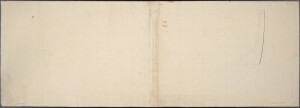 | 10/1761 | [Method of Rep]Body plan --Half-breadth plan --Inboard profile | Plan of a gun boat from 1761 displayed from 3 points of view and a small grid in lower left hand corner on the recto, light sketches of an unnamed vessel on the verso. Additional research on CN 1211 provided by Jonas Franzen: " It’s a very beautiful and well-preserved plan showing one of the large gunboats used by the French to protect their coasts and harbors against the British throughout the entire 18th century. The inscription (corrected for spelling mistakes) is “plan du chaloupe canonnière construit par M. Groignard longueur total 76 pieds largeur 16 pieds portant trois canon de 24. Deux devant et un derrière. Faite à Lorient le 4 Octobre 1761” (roughly: Plan of a chaloupe-gunboat built by Mr. Groignard, overall length 76 French feet, beam 16 French feet, carrying three 24-pounder long guns. Two in the front and one aft. Made in Lorient, the 4th of October 1761). The given dimensions convert into about 81 feet overall length and 17 feet beam. The positions of the three heavy guns are indicated on the plan, as are other constructional details. The term “chaloupe”, or so I think, indicates the vessel to probably carry large lateen or lug sails on its two masts. The name “Groignard” certainly refers to Antoine Groignard, an important French naval engineer (1727 – 1799). Among others, he designed a series of gunboats all built in Lorient between 1761 and 1762 now known as the “Coquette class”. These were of exactly the same dimensions and did carry he exact same armament as the one depicted on the plan. Thus, I think the plan shows one of this series." | MS0781/-01.01#CN 1211 | |||||
| 5 | 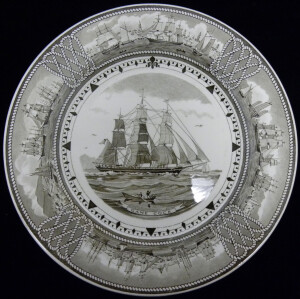 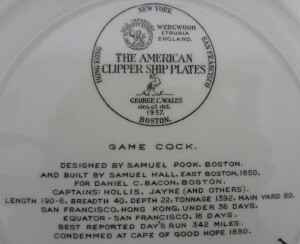 | SHORT DESCRIPTION: Wedgwood plate with transfer print of clipper ship in center and decorative border. SOURCE OF VIEW: Wales, George, artist. NOTES: Many people believe that Samuel Hartt Pook was the designer of Game Cock, but a letter submitted by shipbuilder Samuel Hall to the Boston Daily Atlas on May 10, 1851 proves otherwise: TO THE EDITORS OF THE BOSTON ATLAS -- Gentlemen: I noticed in your columns a communication headed "Clippers" and signed "Square." I am very sorry that I should feel under the necessity to make a reply to Mr. Square. He says:-- "In describing the clipper ships Surprise and Game Cock, barques Mermaid and Race Horse -- all vessels of beautiful models - you have omitted to state that they were designed and modelled by Samuel H. Pook, who is a young man of great scientific attainments." I would be the last to disparage Mr. Pook's scientific attainments, but when Mr. Square, undertakes to deprive me of any credit I have fairly acquired, and place it to the account of another, I shall take the liberty to correct him. I did, after several solicitations from Mr. Pook, employ him to make the models, under my directions, above named -- not that I believe he thought I needed any of his science, but the reverse. He wished to get his name before the public, and wished me to render him all the assistance I could. I did so, the first model made was that of the barque Race Horse. The design was taken from the barque Coquette, designed and built by me several years ago, and the alterations from her were suggested by myself, and approved by Messrs. Paul and J.M. Forbes, before Mr. Pook knew such a vessel was to be built; after the second time trying I did approve of the model, and he laid her down and made the moulds. The next was the ship Surprise. Mr. Square just ask Mr. Pook how many models he made for that ship before I was satisfied, or would consent to have her laid down and moulds made? Just three. The ship Game Cock's model was made for Capt. Daniel C. Bacon, and exhibited to me for my approval, and I did approve of it with some slight alterations, and they were made and I built the ship. The next, and last, was the barque Mermaid. Her model was made for Messrs. Edward Gassett & Co., and by me altered and approved before the moulds were made. This is the true history of the designing and modelling of the above named vessels. And it is a little remarkable that it should so happen that I should have had the good fortune to have built all the beautifully designed and modelled vessels, while all the other models and designs of his are left unnoticed. These are the facts, Mr. Square, and all the merits you have gained for the scientific gentleman by your communication, I shall leave for those interested to judge. | CL5500 | |||||||
| 6 | 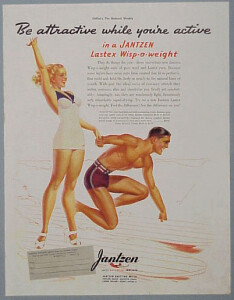 | NOTES: Image is of woman in swim suit and heels standing and holding hands with a man in swim trunks who is crouched beside her. On back is part of an article titled This Woman and This Man. | CL28353 | |||||||
| 7 | 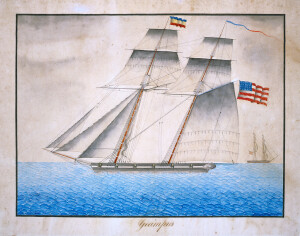 | SHORT DESCRIPTION: Watercolor drawing of USS Grampus. Artist unknown. Port broadside view of ship under full sail except for the fore sail, which is furled. The vessel shown is a double topsail schooner, also called a jackass brig. The schooner appears to be flying a Dutch flag from its fore mast, what may be a commissioning pennant on its main mast, and an American national flag from its gaff at the stern. The water is very stylized. In the background at the right is a brig flying a Spanish flag at its stern. Considering the vessel history, the ship in the background may be a representation of the Puerto Rican pirate Palmyra (alias Pancheta/Panchita). NOTES: From Lloyd’s List, October 11, 1822, No. 5741, The Marine List: The Pancheta [also spelled Panchita] Spanish brig privateer, of 18 guns and 92 men, from Porto Rico, was taken near St. Thomas’s on the 16th August, by the Grampus American Schooner of War, after an engagement in which 11 of the privateer’s crew were killed [a subsequent Supreme Court case about the event stated on man killed and six wounded], & she was in a sinking state when she struck. The Grampus carried her into St. Thomas’s. NOTES: See “Reports of the Decisions in the Supreme Court of the United States, January term, 1827” which relays information about a court case filed after the seizure of the vessel Pancheta/Panchita by the USS Grampus. Executive summary: On August 15, 1822, the brig Palmyra, an armed privateer commissioned by the King of Spain, was captured on the high seas by the USS Grampus. Accused of violating the 1819 Piracy Act, the Palmyra was sent to South Carolina to await judgment. Though the crew was “guilty of plunder,” no law existed under which its members could be punished, so no one was convicted of any crime. The Spanish government, claiming its flag had been “insulted and attacked” and its property stolen, demanded that the Palmyra be returned to its owner. The U.S. Supreme Court determined that the ship was properly forfeited, ruling that it was permissible for the state to take property that had facilitated criminal activity, despite the fact that no person was convicted of a crime. VESSEL INFORMATION - VESSEL NAME: USS GRAMPUS DESIGNER: HENRY ECKFORD VESSEL BUILT: 1821 BUILDER LOCATION: WASHINGTON NAVY YARD, WASHINGTON, D.C. VESSEL DIMENSIONS: 174 T.; 97' x 23'6" x 9'6" VESSEL HISTORY: Grampus was built at the Washington Navy Yard. Designed by Henry Eckford. The ship was laid down in 1820 and launched in August 1821. The Grampus was the largest of five schooners built by the US Navy to suppress piracy and catch slavers. Grampus’s first cruise was as part of the West Indies Squadron that included Hornet, Enterprise, Spark, Porpoise and Shark. The squadron conducted anti-piracy operations and conducted convoys in the Antilles. On August 15, 1822, Grampus fought a brig flying Spanish colors which the commander, Lt. Francis Gregory, suspected was a pirate that had attacked and plundered several American merchant vessels (schooner Coquette, the Juene Eugenie, and other American and vessels of various nations). When he called upon the ship to surrender the brig opened fire. Grampus returned the fire and reduced the vessel to a floating wreck in 3-1/2 minutes. The brig struck its colors and was discovered to be Palmyra, a Puerto Rico based pirate. In 1825, Grampus engaged Puerto Rican pirate Roberto Cofresi, who was captured along with eleven of his crew. Grampus was last seen off St. Augustine, Florida on March 15, 1843 and is presumed to have foundered in a gale off Charleston, South Carolina with all hands. | CL5228 | |||||||
| 8 | 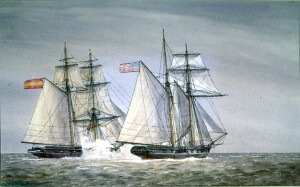 | NOTES: From Lloyd’s List, October 11, 1822, No. 5741, The Marine List: The Pancheta [also spelled Panchita] Spanish brig privateer, of 18 guns and 92 men, from Porto Rico, was taken near St. Thomas’s on the 16th August, by the Grampus American Schooner of War, after an engagement in which 11 of the privateer’s crew were killed [a subsequent Supreme Court case about the event stated on man killed and six wounded], & she was in a sinking state when she struck. The Grampus carried her into St. Thomas’s. NOTES: See “Reports of the Decisions in the Supreme Court of the United States, January term, 1827” which relays information about a court case filed after the seizure of the vessel Pancheta/Panchita by the USS Grampus. Executive summary: On August 15, 1822, the brig Palmyra, an armed privateer commissioned by the King of Spain, was captured on the high seas by the USS Grampus. Accused of violating the 1819 Piracy Act, the Palmyra was sent to South Carolina to await judgment. Though the crew was “guilty of plunder,” no law existed under which its members could be punished, so no one was convicted of any crime. The Spanish government, claiming its flag had been “insulted and attacked” and its property stolen, demanded that the Palmyra be returned to its owner. The U.S. Supreme Court determined that the ship was properly forfeited, ruling that it was permissible for the state to take property that had facilitated criminal activity, despite the fact that no person was convicted of a crime. VESSEL INFORMATION - VESSEL NAME: USS GRAMPUS DESIGNER: HENRY ECKFORD VESSEL BUILT: 1821 BUILDER LOCATION: WASHINGTON NAVY YARD, WASHINGTON, D.C. VESSEL DIMENSIONS: 174 T.; 97' x 23'6" x 9'6" VESSEL HISTORY: Grampus was built at the Washington Navy Yard. Designed by Henry Eckford. The ship was laid down in 1820 and launched in August 1821. The Grampus was the largest of five schooners built by the US Navy to suppress piracy and catch slavers. Grampus’s first cruise was as part of the West Indies Squadron that included Hornet, Enterprise, Spark, Porpoise and Shark. The squadron conducted anti-piracy operations and conducted convoys in the Antilles. On August 15, 1822, Grampus fought a brig flying Spanish colors which the commander, Lt. Francis Gregory, suspected was a pirate that had attacked and plundered several American merchant vessels (schooner Coquette, the Juene Eugenie, and other American and vessels of various nations). When he called upon the ship to surrender the brig opened fire. Grampus returned the fire and reduced the vessel to a floating wreck in 3-1/2 minutes. The brig struck its colors and was discovered to be Palmyra, a Puerto Rico based pirate. In 1825, Grampus engaged Puerto Rican pirate Roberto Cofresi, who was captured along with eleven of his crew. Grampus was last seen off St. Augustine, Florida on March 15, 1843 and is presumed to have foundered in a gale off Charleston, South Carolina with all hands. NOTES: Information concerning the Bailey Collection of watercolor views of U.S. Naval actions (1745-1850) in The Mariners’ Museum, Newport News, Virginia In 1940 The Mariners’ purchased from a dealer in London a collection of 254 watercolor drawings, which were at the time attributed to Charles T. Warren (1767-1823), an engraver. They were represented as having belonged to a Charles Kingsley Bailey, and have henceforth been referred to as the Bailey Collection. The views in the collection range from the Siege of Louisburg in 1745 to an action which occurred in 1850. Simply on the basis of the breadth of coverage, then, it appeared unlikely that these were executed contemporary to the action by one person. Moreover, persons making studies of individual vessels represented in the collection have pointed out that there are major inaccuracies in the details of the vessels. Research initiated by the museum from 1974 to 1982 subsequently revealed that the watercolors were actually done by Irwin John Bevan (1852-1940). Welsh-born Bevan was a keen naval historian and his sketches and paintings included many maritime subjects. His work can be seen in Sea Fights of the Great War by W.L. Wyllie and M. F. Wrenn, published in 1918. Since Bevan did book illustrations, the present assumption is that this group of watercolors was executed to illustrate a projected work on the history of the U.S. Navy, especially as it related to the British Navy. Detailed contemporary accounts of the U.S.-British actions were written down in letters, official reports and newspapers of the day and nineteenth century historians had these sources available for their texts. The accounts accompanying Bevan’s paintings relied heavily on all these sources. Notwithstanding this however, the paintings must not be taken as primary documents of either the vessels or the engagements. They should be viewed in the context of the artist’s conceptions, which may vary considerably in their reliability. It is left to the discretion of the researcher whether or not this material will be of value in the current project. | CL12265 | |||||||
| 9 | 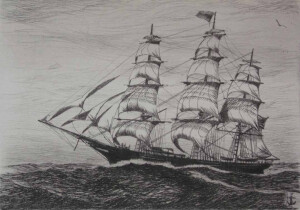 | NOTES: Many people believe that Samuel Hartt Pook was the designer of Surprise, but a letter submitted by shipbuilder Samuel Hall to the Boston Daily Atlas on May 10, 1851 proves otherwise: TO THE EDITORS OF THE BOSTON ATLAS -- Gentlemen: I noticed in your columns a communication headed "Clippers" and signed "Square." I am very sorry that I should feel under the necessity to make a reply to Mr. Square. He says:-- "In describing the clipper ships Surprise and Game Cock, barques Mermaid and Race Horse -- all vessels of beautiful models - you have omitted to state that they were designed and modelled by Samuel H. Pook, who is a young man of great scientific attainments." I would be the last to disparage Mr. Pook's scientific attainments, but when Mr. Square, undertakes to deprive me of any credit I have fairly acquired, and place it to the account of another, I shall take the liberty to correct him. I did, after several solicitations from Mr. Pook, employ him to make the models, under my directions, above named -- not that I believe he thought I needed any of his science, but the reverse. He wished to get his name before the public, and wished me to render him all the assistance I could. I did so, the first model made was that of the barque Race Horse. The design was taken from the barque Coquette, designed and built by me several years ago, and the alterations from her were suggested by myself, and approved by Messrs. Paul and J.M. Forbes, before Mr. Pook knew such a vessel was to be built; after the second time trying I did approve of the model, and he laid her down and made the moulds. The next was the ship Surprise. Mr. Square just ask Mr. Pook how many models he made for that ship before I was satisfied, or would consent to have her laid down and moulds made? Just three. The ship Game Cock's model was made for Capt. Daniel C. Bacon, and exhibited to me for my approval, and I did approve of it with some slight alterations, and they were made and I built the ship. The next, and last, was the barque Mermaid. Her model was made for Messrs. Edward Gassett & Co., and by me altered and approved before the moulds were made. This is the true history of the designing and modelling of the above named vessels. And it is a little remarkable that it should so happen that I should have had the good fortune to have built all the beautifully designed and modelled vessels, while all the other models and designs of his are left unnoticed. These are the facts, Mr. Square, and all the merits you have gained for the scientific gentleman by your communication, I shall leave for those interested to judge. NOTES: Charles J. A. Wilson was born in 1880 in Glasgow, Scotland. He came to America as an infant and in his teens moved to Newton, Massachusetts. Wilson was a prolific, self-taught, marine artist who gained much of his experience from working in the Boston shipyards. He worked as an artist for Bethlehem Shipbuilding in East Boston, etching their ships from blueprints. During the World War I, Wilson spent two years in France. After the war he was commissioned to paint and etch American ships and marine views. During World War II, Wilson worked in Boston as an official Coast Guard artist. He was a member of the Boston Society of Printmakers, and exhibited with Pennsylvania Academy of the Fine Arts, Society of American Etchers and the Currier Gallery. VESSEL INFORMATION-- VESSEL NAME: SURPRISE VESSEL TYPE: Clipper SERVICE DATES: 1850-1876 DATE WRECKED: February 3, 1876 SHIP BUILDER: Samuel Hall BUILDER LOCATION: Massachusetts, East Boston PLACE OF REGISTRATION: New York FATE: Struck on Plymouth Rocks in Kaneda Bay, Japan on February 3, 1876 while on a voyage from New York to Yokohama and was lost. SHIP OWNERS: A.A. Low & Brother DIMENSIONS: 1006 tons (new measurement); 183' 3" x 38'8" x 22' VESSEL HISTORY: Clipper built in East Boston in 1850 for A. A. Low & Brother. Used in the China trade although the vessel also made three trips from the East Coast of the United States to California. Surprise was one of the most profitable clipper ships ever constructed. On her first voyage she sailed to San Francisco in 96 days and 15 hours, beating the record set by Sea Witch, by one day. Surprise arrived to California with 1,800 tons of cargo, making $78,000 in freight fees. From there she sailed to China. On her third trip, when she arrived in London with a freight of tea from Canton, China on the 12th of November 1851, the profit was calculated at $50,000. Surprise made eleven consecutive passages from China to New York in eighty-nine days or less, six from Hong-Kong, five from Shanghai. Surprise encountered a heavy gale in Kaneda Bay, off Yokohama, Japan on February 4, 1876, and struck an underwater rock. Four days later, the ship was found. It was floating bottom up. The ship itself was a total loss, but 10,000 cases of kerosene it was carrying were salvaged. No deaths were reported. Responsibility for the mishap was placed on an "unqualified pilot, who boarded the ship off the entrance to Tokyo Bay." | CL11750 | |||||||
| 10 | 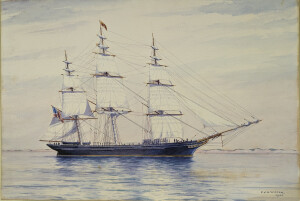 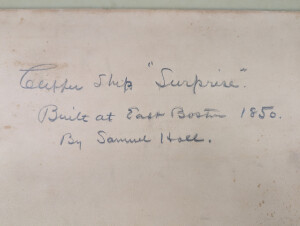 | NOTES: Many people believe that Samuel Hartt Pook was the designer of Surprise, but a letter submitted by shipbuilder Samuel Hall to the Boston Daily Atlas on May 10, 1851 proves otherwise: TO THE EDITORS OF THE BOSTON ATLAS -- Gentlemen: I noticed in your columns a communication headed "Clippers" and signed "Square." I am very sorry that I should feel under the necessity to make a reply to Mr. Square. He says:-- "In describing the clipper ships Surprise and Game Cock, barques Mermaid and Race Horse -- all vessels of beautiful models - you have omitted to state that they were designed and modelled by Samuel H. Pook, who is a young man of great scientific attainments." I would be the last to disparage Mr. Pook's scientific attainments, but when Mr. Square, undertakes to deprive me of any credit I have fairly acquired, and place it to the account of another, I shall take the liberty to correct him. I did, after several solicitations from Mr. Pook, employ him to make the models, under my directions, above named -- not that I believe he thought I needed any of his science, but the reverse. He wished to get his name before the public, and wished me to render him all the assistance I could. I did so, the first model made was that of the barque Race Horse. The design was taken from the barque Coquette, designed and built by me several years ago, and the alterations from her were suggested by myself, and approved by Messrs. Paul and J.M. Forbes, before Mr. Pook knew such a vessel was to be built; after the second time trying I did approve of the model, and he laid her down and made the moulds. The next was the ship Surprise. Mr. Square just ask Mr. Pook how many models he made for that ship before I was satisfied, or would consent to have her laid down and moulds made? Just three. The ship Game Cock's model was made for Capt. Daniel C. Bacon, and exhibited to me for my approval, and I did approve of it with some slight alterations, and they were made and I built the ship. The next, and last, was the barque Mermaid. Her model was made for Messrs. Edward Gassett & Co., and by me altered and approved before the moulds were made. This is the true history of the designing and modelling of the above named vessels. And it is a little remarkable that it should so happen that I should have had the good fortune to have built all the beautifully designed and modelled vessels, while all the other models and designs of his are left unnoticed. These are the facts, Mr. Square, and all the merits you have gained for the scientific gentleman by your communication, I shall leave for those interested to judge. VESSEL INFORMATION-- VESSEL NAME: SURPRISE VESSEL TYPE: Clipper SERVICE DATES: 1850-1876 DATE WRECKED: February 3, 1876 SHIP BUILDER: Samuel Hall BUILDER LOCATION: Massachusetts, East Boston PLACE OF REGISTRATION: New York FATE: Struck on Plymouth Rocks in Kaneda Bay, Japan on February 3, 1876 while on a voyage from New York to Yokohama and was lost. SHIP OWNERS: A.A. Low & Brother DIMENSIONS: 1006 tons (new measurement); 183' 3" x 38'8" x 22' VESSEL HISTORY: Clipper built in East Boston in 1850 for A. A. Low & Brother (Boston's first clipper ship). Used in the China trade although the vessel also made three trips from the East Coast of the United States to California. Surprise was one of the most profitable clipper ships ever constructed. On her first voyage she sailed to San Francisco in 96 days and 15 hours, beating the record set by Sea Witch, by one day. Surprise arrived to California with 1,800 tons of cargo, making $78,000 in freight fees. From there she sailed to China. On her third trip, when she arrived in London with a freight of tea from Canton, China on the 12th of November 1851, the profit was calculated at $50,000. Surprise made eleven consecutive passages from China to New York in eighty-nine days or less, six from Hong-Kong, five from Shanghai. Surprise encountered a heavy gale in Kaneda Bay, off Yokohama, Japan on February 4, 1876, and struck an underwater rock. Four days later, the ship was found. It was floating bottom up. The ship itself was a total loss, but 10,000 cases of kerosene it was carrying were salvaged. No deaths were reported. Responsibility for the mishap was placed on an "unqualified pilot, who boarded the ship off the entrance to Tokyo Bay." | CL6514 | |||||||
| 11 | No image URL. | Circa 1920 | Larchmont Yacht Club (Larchmont, N.Y.)–Photographs. | Larchmont (N.Y.)–Photographs. | Yachts–Photographs.; Yachting–Photographs.; Yacht clubs–Photographs.; Yacht racing–Photographs.; Sailboats–Photographs.; Motorboats–Photographs.; Schooners–Photographs.; Sloops–Photographs. | Contains photographic negatives of the Larchmont Yacht Club, thye yacht Amphitrite, various unidentified Q class vessels, the yacht Newima, the yacht Pahlo, the yacht Nedeva, the auxiliary cutter Gypsy, the yacht Agawam, the yacht Caritas, the power yacht Coquette, the yacht Gray Ghost, the auxiliary schooner Tradition, various unidentified A class yachts, the yacht Blitzen, the yacht Baruna, various unidentified CC class yachts, the yacht Mistress, the yacht Trivet, the yacht Latifa, and various unidentified sailing and power yachts at the Larchmont Yacht Club. | P0002.001/50-047A | |||
| 12 | 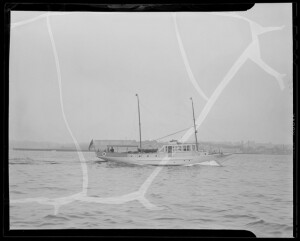 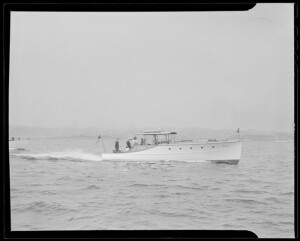 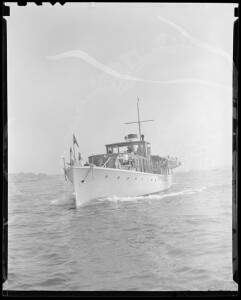 | Circa 1920 | New London (Conn.)–Photographs. | Yachts–Photographs.; Yachting–Photographs.; Yacht racing–Photographs.; Sailboats–Photographs.; Motorboats–Photographs. | Contains photographic negatives of the Harvard Yale Regatta, the yacht Alma, the yacht Agawam, the yacht Adventuress, the yacht Akela III, the yacht Alycia, the yacht Kalmia, the yacht Alcy, the yacht Althea, the yacht Aphrodite, the yacht Ardea, the yacht Arev, the yacht Ariel, the yacht Beeswing III, the yacht Coquette, the yacht Barbara III, the yacht Benham, the yacht Bunnie, the yacht Betty Ann, the yacht Banhu, the yacht Bidgee, the yacht Cheerio Too, the yacht Coquina, the yacht Doroben, the yacht Cutty Sark, the yacht Charmer, the launching of the yacht Migrant at the Harvard Yale Regatta, the yacht Chin Chin, the yacht Dorel, the yacht Doreon, and various unidentified sailing and power yachts at the Harvard Yale Regatta. | P0002.001/50-052 | ||||
| 13 | 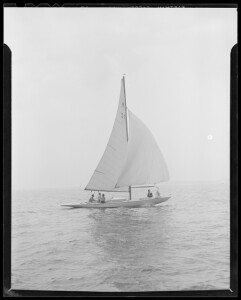 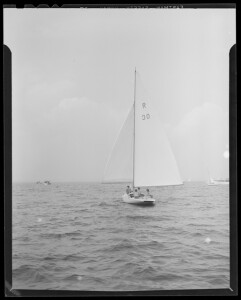 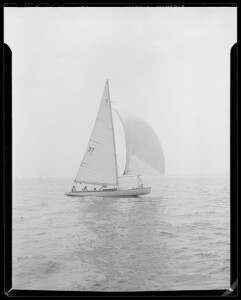 | 1939-1940 | International Star Class Yacht Racing Association–Photographs. | Yachts–Photographs.; Yachting–Photographs.; Yacht racing–Photographs.; Sailboats–Photographs.; Motorboats–Photographs. | Contains photographic negatives of unidentified R class vessels, unidentified 7 meter class vessels, unidentified sailing and power yachts, unidentified Anchor class vessels, the Indian Head class vessel Coquette, the Indian Head class vessel Taquarn, unidentified Lightning class vessels, unidentified Indian Head class vessels, unidentified International Star class vessels, the International Star class vessel Vesta, the International Star class vessel Mimi, the International Star class vessel Fatima, and the International Star class vessel Wings II. | P0002.001/50-132 | ||||
| 14 | 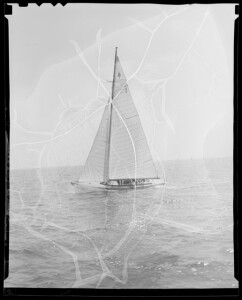 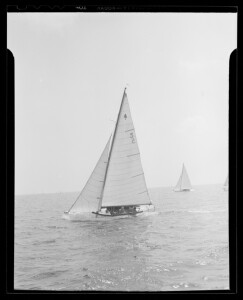 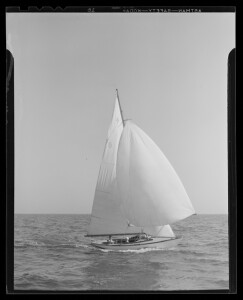 | 1937-1939 | Fire Island Lighthouse (N.Y.)–Photographs. | Fire Island (N.Y. : Island)–Photographs. | Yachts–Photographs.; Yachting–Photographs.; Yacht racing–Photographs.; Sailboats–Photographs.; Motorboats–Photographs.; Regattas–Photographs.; Lighthouses–Photographs. | Contains photographic negatives of the Timber Point class race, the yacht Winsome II, unidentified Timber Point class vessels, the yacht Three Star, the yacht First Lady, the yacht Boots, Indian Head class race start, the Indian Head class vessel Coquette, the yacht Taquarn, unidentified Safety Pin class vessels, Zephyr class vessels in race, unidentified Zephyr and Star class vessels, the Zephyr class vessel Duchess, the Zephyr class vessel Xanthippe, the Zephyr class vessel Punt Jack, the SB class vessel Sandpiper, the SB class vessel Avocet, the SB class vessel Falcon, unidentified P class vessels, the vessel Kedra, the power yacht Moana, the Fire Island Lighthouse, and the Harvard Columbus Expedition vessel Capitana. | P0002.001/50-106 | |||
| 15 | 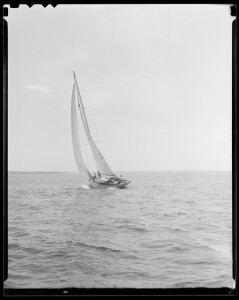 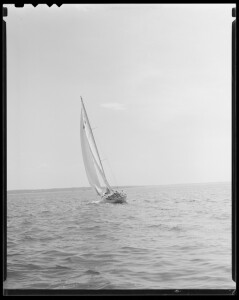 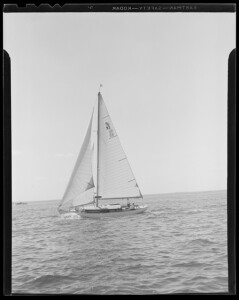 | Circa 1920 | New York Yacht Club–Photographs. | New London (Conn.)–Photographs.; Newport (R.I.)–Photographs.; Block Island (R.I. : Island)–Photographs. | Yachts–Photographs.; Yachting–Photographs.; Yacht clubs–Photographs.; Yacht racing–Photographs.; Sailboats–Photographs.; Motorboats–Photographs.; Sloops–Photographs.; Boaters (Persons)–Photographs. | Contains photographic negatives of the Bayside-Block Island Race, the yacht Amitie, the yacht Coquette, unidentified handicap yawls and other handicap vessels, unidentified Atlantic Coast vessels, the yacht Alibi II, unidentified F, I, and S class vessels, unidentified Q class vessel, unidentified sloops, the yacht Hobnob, the passenger ship Evangeline, auxiliary sloops, the yacht Blue Water, the New London to Newport cruise, the New York Yacht Club and the New York Yacht Club Cruise, the yacht Seven Seas, and men washing down yachts. | P0002.001/50-065A | |||
| 16 | 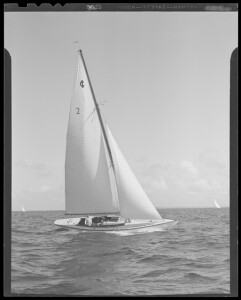 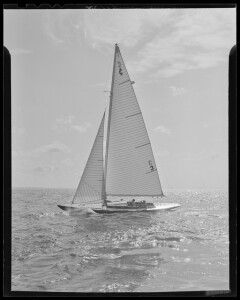 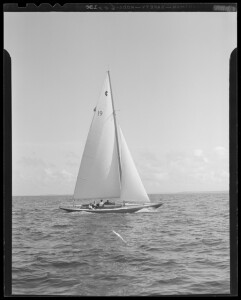 | 1939-1940 | New York Yacht Club–Photographs.; Seawanhaka Corinthian Yacht Club (Oyster Bay, N.Y.)–Photographs.; International Star Class Yacht Racing Association–Photographs.; Boston (Turbo Steamship : 1924)–Photographs. | New York (N.Y.)–Photographs.; Newport (R.I.)–Photographs.; Oyster Bay (N.Y. : Bay)–Photographs. | Yachts–Photographs.; Yachting–Photographs.; Yacht clubs–Photographs.; Yacht racing–Photographs.; Sailboats–Photographs.; Motorboats–Photographs.; Cutters–Photographs.; Schooners–Photographs.; Sloops–Photographs.; Passenger ships–Photographs.; Cruise ships–Photographs.; Yawls–Photographs. | Contains photographic negatives of the New York Yacht Club and the New York Yacht Club cruise, unidentified International class vessels, the International class vessel Susan, the International class vessel Maid of Honour, the Seawanhaka class vessel Heather, the Seawanhaka class vessel Mist, the Seawanhaka class vessel Swift, the Seawanhaka class vessel Wildo, shots of a wind-driven light plant, the auxiliary yawl Manxman, the auxiliary sloop Arturus, the auxiliary yawl Blue Sea, unidentified auxiliary cutters, the auxiliary schooner Draconis, the sloop Halvis, the auxiliary schooner Jesting II, the sloop Typhoon, the power yacht Elco, the power yacht Jama, the power yacht Judity R, the power yacht Jug, the power yacht Whirligy, the Handicap class vessel Rose, the Handicap class vessel Coquette, the auxiliary cutter Mistral, the International class vessel Allegra, the International class vessel Feather, the International class vessel Aileen, unidentiified Atlantic Coast class vessels, unidentified Victory class vessels, the International Star class vessel Andiamo V, the International Star class vessel Spirit, unidentified International Star class vessels, the International Star Class vessel Spitfire, the passenger ship Boston, and the auxiliary schooner Aeolus. | P0002.001/50-138 | |||
| 17 | 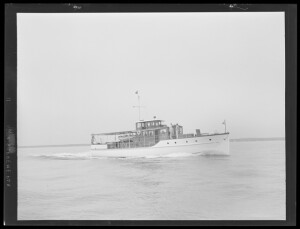 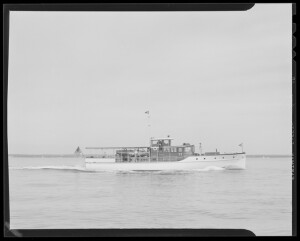 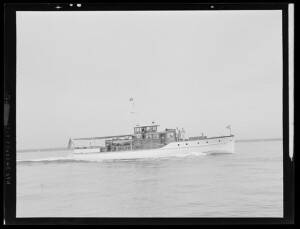 | 1939-1940 | New York Yacht Club–Photographs.; International Star Class Yacht Racing Association–Photographs. | New York (N.Y.)–Photographs.; Newport (R.I.)–Photographs. | Yachts–Photographs.; Yachting–Photographs.; Yacht clubs–Photographs.; Yacht racing–Photographs.; Sailboats–Photographs.; Motorboats–Photographs.; Yawls–Photographs.; Ketches–Photographs.; Schooners–Photographs.; Sloops–Photographs. | Contains photographic negatives of the New York Yacht Club and the New York Yacht Club cruise, the power yacht Saunterer, the power yacht Venture, the power yacht Yetta, unidentified Coast Guard patrols, the auxiliary yawl Foam, the sloop Full Moon, the auxiliary ketch Gander, the auxiliary ketch Musketeer, unidentified auxiliary ketches and dingies, the auxiliary ketch Marionette, the auxiliary ketch Ptiloris, the auxiliary schooner Saraband, the auxiliary schooner Victoria, the auxiliary yawl Bittersweet II, the Handicap class vessel Coquette, the Handicap class vessel Noremac, unidentified Weekender class vessels, the Weekender class vessel Neap Tide, the International Star Class vessel Mr Caldwell, unidentified Victory class vessels, unidentified sloops, the Star class vessel Woodcock, the Star class sloop Sandust, unidentified International Star Class vessels, the Star class vessel Auley, the Star class vessel Fidget, the Star class vessel Elaine, unidentified Atlantic Coast class vessels, the Atlantic Coast class vessel Kumon, the Atlantic Coast class vessel Bobcat, and the Atlantic Coast class vessel Rosie. | P0002.001/50-136 | |||
| 18 | 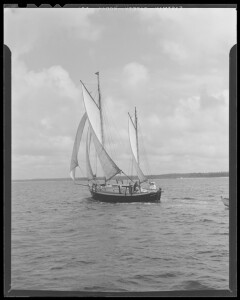 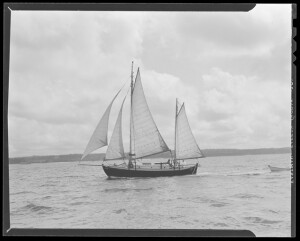 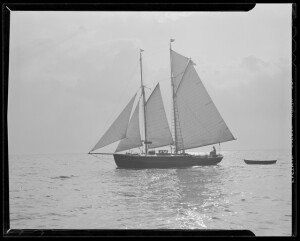 | 1939-1940 | International Star Class Yacht Racing Association–Photographs. | Yachts–Photographs.; Yachting–Photographs.; Yacht racing–Photographs.; Yawls–Photographs.; Schooners–Photographs.; Sloops–Photographs.; Ketches–Photographs.; Sailboats–Photographs.; Motorboats–Photographs.; Tankers–Photographs.; Boaters (Persons)–Photographs. | Contains photographic negatives of the auxiliary ketch Fairwind, the power schooner Sylvia, the auxiliary schooner Windigo, the auxiliary yawl Whitecap, unidentified sloops, unidentified International Star class vessels, the Seawanhaka class vessel Heather, the Seawanhaka class vessel Mist, the Seawanhaka class vessel Wildo, the Victory class vessel Jimmie, unidentified Atlantic Coast class vessels, the International class vessel Mystic, the International class vessel Grisle, unidentified Seabird class vessels, the auxiliary sloop Teal, the tanker M J Derby, the power ketch Bonnie Dundee, four people on the deck of the yawl Cayuga, the power yacht Lucky Strike, the power yacht Streak, unidentified Lightning class vessels, unidentified Handicap class vessels, the Victory class yacht Blue Jacket, the sloop Coquette, and the International class vessel Imp. | P0002.001/50-128 | ||||
| 19 | 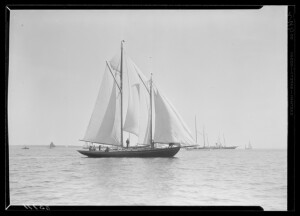 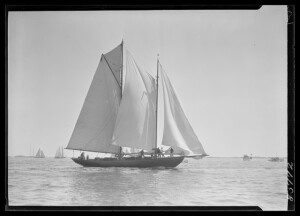 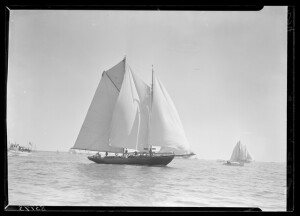 | Circa 1920 | New York Yacht Club–Photographs.; Priscilla (Steamship : 1922)–Photographs. | Newport (R.I.)–Photographs.; Bermuda Island (Bermuda Islands)–Photographs. | Yachts–Photographs.; Yachting–Photographs.; Yacht clubs–Photographs.; Sailboats–Photographs.; Schooners–Photographs.; Steamboats–Photographs.; Yacht racing–Photographs. | Contains photographic negatives of sailing yachts, schooners and power schooners, power yachts, steamboats, the Bermuda Yacht Race, the yacht Tradewind, the yacht Countess, the auxiliary schooner Inanda II, the yacht Malabar III, the yacht Primrose III, the yacht Beatrice, the yacht Fontinalis, the sea sled Runabout, the power yacht Corisande, the Harvard-Yale Regatta, the yacht Aaronella, the yahct Adroit II, the yacht Aloha, the yacht Bee, the yacht Bienestar, the yacht Cachalot, the yacht Caritas, the yacht Chin Chin, the yacht Coquette, the yacht Daphne, the yacht Dixie, the yacht Donnygill, the yacht Eagle, the yacht Early Bird, the yacht Elida II, the yacht Frances III, the yacht Felisi, the yacht Francelia, the yacht Gulf Stream, the yacht Hilaria, the yacht Heather, the yacht Hussar, the yacht Indian, the yacht Juanita, the yacht Laura, the yacht Moana, the yacht Meglidis, the yacht Maunda Loa II, the yacht Muskeeta, the yacht Miramar, unloading of the runabout Lady Jane, the steamboat Priscilla, the New York Yacht Club, the New York Yacht Club cruise, the cruise yacht Lynx VI, the cruise yacht Adventurer, schooner races, the cruise yacht Amorilla, the auxiliary schooner Curlew, the cruise yacht Fei Seen, the cruise yacht Mistral, the cruise yacht Marjee, the cruise yacht Malabar VII, the cruise yacht Resolute, the cruise yacht Sealove, the cruise yacht Alta, the power yacht Alpha, the auxiliary schooner Vagrant, and the power yacht Taormina. | P0002.001/50-004 |
Created 2026 by Don Barker, CBMM volunteer, for the Chesapeake Shipbuilding Project. shipbuilding@sailingworkboats.es